🌿 Déodorant maison facile : une recette naturelle qui fonctionne vraiment / 🌿 Easy Homemade Deodorant Recipe That Actually Works
VertQi.Cloud
4/6/20265 min temps de lecture
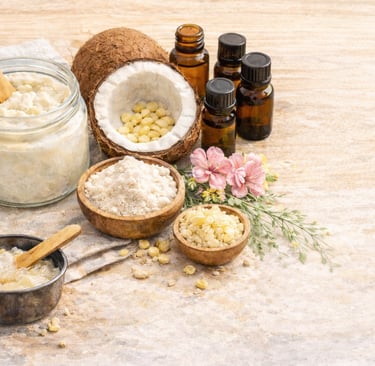
🌿 Easy Homemade Deodorant Recipe That Actually Works
Lately, I’ve been craving simplicity.
Less processed products, more natural solutions… and ingredients I truly understand.
That’s how I ended up trying a homemade deodorant recipe inspired by
Les Mauvaises Herbes — a trusted reference when it comes to natural DIY.
And honestly? I didn’t expect it to work this well.
🧴 Why Make Your Own Deodorant?
Most commercial deodorants contain ingredients like aluminum salts, which have raised concerns regarding long-term health and skin absorption.
A homemade version allows you to:
Control every ingredient
Avoid unnecessary or irritating additives
Choose a more gentle and body-friendly approach
And the best part? It actually works.
🌱 The Simple & Effective Recipe
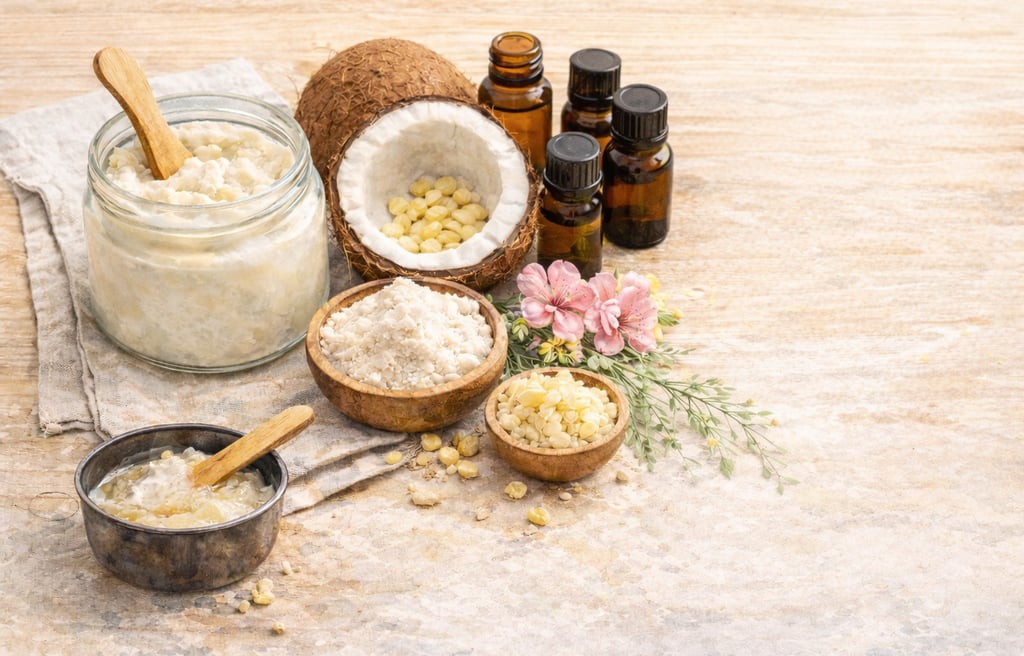
Here’s the exact recipe I’m using right now:
Ingredients:
90 ml (6 tbsp) coconut oil
10 ml (2 tsp) raw grated beeswax
60 ml (1/4 cup) baking soda
60 ml (1/4 cup) organic arrowroot powder
30 drops palmarosa essential oil
10 drops clary sage essential oil
15 drops geranium bourbon essential oil
5 drops ylang-ylang essential oil
💡 Note: You can absolutely adjust the essential oils depending on what you love or already have at home.
🔥 How to Make It
Melt the coconut oil and beeswax using a double boiler
Remove from heat
Add baking soda and arrowroot powder
Mix thoroughly
Add essential oils
Stir occasionally as it cools to keep a smooth texture
⚠️ What You Need to Know
This is a 100% natural product, so:
It melts in warm temperatures (totally normal — coconut oil!)
You may need to stir it occasionally
It’s not an antiperspirant → you will sweat, but without odor
And honestly… that’s exactly the goal.
🌸 Why This Recipe Works (Science-Backed)
Each ingredient plays an important role:
Coconut oil: naturally antibacterial (rich in lauric acid)
Baking soda: neutralizes odor by balancing pH
Arrowroot powder: helps absorb moisture
Essential oils:
Palmarosa: strong antibacterial properties
Clary sage: may help regulate perspiration
Geranium: purifying and balancing
Ylang-ylang: soothing and beautifully fragrant
👉 Research shows that certain essential oils (like palmarosa and geranium) have effective antimicrobial activity against odor-causing bacteria.
🧘♀️ When Life Gets Too Busy…
Let’s be real… sometimes life moves fast.
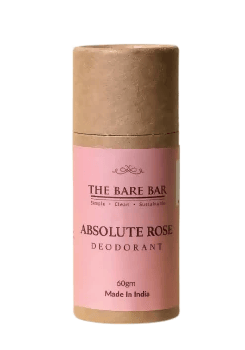
When I don’t have time to make a new batch, I like using the deodorant from
The Bare Bar — Absolute Rose.
👉 Handmade
👉 Natural ingredients
👉 Very similar performance to the homemade version
💡 Tip:
If you want to try it, go for bundle purchases to get a better deal, and consider joining their program for extra savings.
🌿 My Personal Experience
I’ve tested quite a few recipes… some worked, some didn’t 😅
But this one:
lasts all day
feels gentle on my skin
and gives me that sense of going back to something more natural
It’s become a simple, but powerful ritual.
📚 Scientific References
Here are credible sources supporting the benefits of these ingredients:
Verallo-Rowell VM et al. (2008) — Antibacterial effects of coconut oil
Burt S. (2004) — Essential oils and their antibacterial properties
Dorman HJD & Deans SG (2000) — Antimicrobial agents from plants
Drake DR et al. (1997) — Impact of pH on bacterial growth
Imhof RE et al. (2009) — Skin hydration and powder absorption studies
✨ Final Thoughts
Making your own deodorant isn’t just a trend.
It’s a conscious choice:
cleaner
simpler
and surprisingly effective
If you’re curious… try it for a week.
You might not go back 😉
---
(Français)
🌿 Déodorant maison facile : une recette naturelle qui fonctionne vraiment
Ces derniers temps, j’ai envie de revenir à l’essentiel. Moins de produits transformés, plus de simplicité… et surtout, des ingrédients que je comprends.
C’est dans cet esprit que j’ai testé une recette de déodorant maison inspirée du site
Les Mauvaises Herbes — une référence incontournable quand on parle de DIY naturel.
Et honnêtement ? Je ne m’attendais pas à ce que ça fonctionne aussi bien.
🧴 Pourquoi faire son déodorant maison ?
Les déodorants commerciaux contiennent souvent des ingrédients controversés comme les sels d’aluminium, liés à des préoccupations de santé (notamment en lien avec l’absorption cutanée).
À l’inverse, une version maison permet :
de contrôler les ingrédients
d’éviter les composés irritants ou inutiles
d’opter pour une approche plus douce et respectueuse du corps
Mais surtout… ça marche vraiment.
🌱 La recette simple et efficace
Voici la recette que j’utilise actuellement :
Ingrédients :
90 ml (6 c. à soupe) d’huile de coco
10 ml (2 c. à thé) de cire d’abeille crue râpée
60 ml (1/4 tasse) de bicarbonate de soude
60 ml (1/4 tasse) de fécule d’arrow-root bio
30 gouttes d’huile essentielle de palmarosa bio
10 gouttes d’huile essentielle de sauge sclarée bio
15 gouttes d’huile essentielle de géranium Bourbon
5 gouttes d’huile essentielle d’ylang-ylang
💡 Petit rappel important : les huiles essentielles peuvent être adaptées selon vos préférences ou ce que vous avez sous la main.
🔥 Mode de préparation
Faire fondre l’huile de coco et la cire d’abeille au bain-marie
Retirer du feu
Ajouter le bicarbonate de soude et la fécule d’arrow-root
Bien mélanger
Ajouter les huiles essentielles
Mélanger régulièrement pendant que le mélange refroidit pour une texture homogène
⚠️ Ce qu’il faut savoir (très important)
On parle ici d’un produit 100 % naturel, donc :
Il fond à la chaleur (normal, c’est de l’huile de coco !)
Il faut parfois rebrasser légèrement
Ce n’est pas un anti-transpirant → vous allez transpirer, mais sans odeur
Et honnêtement… c’est exactement ce qu’on veut.
🌸 Pourquoi cette recette fonctionne (appuyé par la science)
Chaque ingrédient a un rôle bien précis :
Huile de coco : propriétés antibactériennes (acide laurique)
Bicarbonate de soude : neutralise les odeurs en modifiant le pH
Arrow-root : absorbe l’humidité naturellement
Huiles essentielles :
Palmarosa : antibactérienne reconnue
Sauge sclarée : régule la transpiration
Géranium : équilibre et purifie
Ylang-ylang : apporte une touche apaisante et florale
👉 Des études ont démontré que certaines huiles essentielles (comme le palmarosa et le géranium) possèdent des propriétés antimicrobiennes efficaces contre les bactéries responsables des odeurs corporelles.
🧘♀️ Et quand on manque de temps…
Parce que soyons honnêtes… parfois la vie va trop vite.
Quand je n’ai pas le temps de refaire une batch, j’utilise le déodorant de la marque
The Bare Bar — version Absolute Rose.
👉 Fait à la main
👉 Ingrédients naturels
👉 Efficacité très comparable à la recette maison
💡 Petite astuce :
Si vous souhaitez l’essayer, faites un achat multiple pour profiter d’une réduction intéressante, et pensez à adhérer au programme pour obtenir un pourcentage supplémentaire.
🌿 Mon expérience personnelle
J’ai testé plusieurs recettes… certaines réussies, d’autres moins 😅
Mais celle-ci :
tient bien toute la journée
respecte ma peau
et surtout, me donne ce sentiment de revenir à quelque chose de plus vrai
C’est devenu un petit rituel simple, mais puissant.
📚 Références scientifiques
Voici quelques sources crédibles qui appuient les bienfaits des ingrédients :
Coconut oil antibacterial properties
Verallo-Rowell VM et al. (2008). Novel antibacterial and emollient effects of coconut oil
Essential oils antimicrobial activity
Burt S. (2004). Essential oils: their antibacterial properties and potential applications
Palmarosa & geranium antimicrobial effects
Dorman HJD & Deans SG (2000). Antimicrobial agents from plants
Baking soda and pH control
Drake DR et al. (1997). Impact of pH on bacterial growth
Arrow-root absorbent properties (starch-based powders)
Imhof RE et al. (2009). Skin hydration and powder absorption studies
✨ Conclusion
Faire son déodorant maison, ce n’est pas juste une tendance.
C’est un choix :
plus conscient
plus doux
et étonnamment efficace
Et si vous hésitez encore… testez-le une semaine.
Vous pourriez être surpris 😉
Si tu veux, je peux maintenant te faire :
(Some links in this article are affiliate links. This allows me to support the content of this site at no additional cost to you.)
(Certains liens dans cet article sont des liens affiliés. Cela me permet de soutenir le contenu du site, sans frais supplémentaires pour vous.)